Advertisement







Supreme Court Rulings in 2013 Reaching Into City Buildings and Courthouses
Many times those of us in the legislature and our colleagues serving at the local level find ourselves confronted with what appear to be bizarre situations, often times created by court action somewhere else in the country that has broad reaching impact and consequences. In the upcoming term of the United States Supreme Court there are a few cases on the docket which have the potential to impact state and local government in ways none us of would have considered, resulting from actions taken by others far beyond our borders.
While it’s true the United States Constitution provides great latitude in the area of state’s rights, there remains one arm of government that knows no boundaries and we are about to see just how far the high court will go in addressing cases that may affect state government, as well as many cities and counties.
In the case of the Town of Greece v Gallaway, the town of Greece, located in upstate New York, has had a long history of allowing anyone from the clergy who wanted to give the invocation before the town council meeting to just show up at the meeting. However, in the 10 years since they began the practice there have only been four instances where the individual offering the prayer were not Christians.
The U.S. Second Circuit Court of Appeals said the city had violated the First Amendment provisions which say, “Congress shall make no laws respecting the establishment of religion”, because those with Christian beliefs were disproportionately represented.
When Supreme Court last considered a case concerning the issue of invocations offered before the commencement of government meetings, in 1983, it specifically addressed state legislatures and said the legislature could employ a chaplain as long as the individual was not permitted to “exploit or proselytize or advance any one, or to disparage and other faith or belief.”
In Kentucky it is the practice of both the House and Senate to have a member of the clergy, generally invited by one of the members, to offer an invocation at the opening of the session each day. While many communities allow prayer by individual members or local clergy, this ruling could have widespread impact in Kentucky from the smallest of cities to the state capitol.
Another case that has the potential to impact local governments, from a financial standpoint, is a case that has worked its way through the court system from Illinois. The case, known as Madigan v Levin, is a case where an individual is alleging his termination as an Assistant Attorney General was based on both his age and gender. In government, individuals alleging discrimination must first take their case to the Equal Employment Opportunity Commission which seeks to settle the case through mediation and avoid the cost of lawsuits.
In this case the employee bypassed the Commission and took alleged civil rights violation directly to the courts. If his action is allowed to stand the impact on cities and counties may be substantial and costly to the taxpayers. Should the court rule employees can take their cases directly to federal courts, avoiding the potential for mediation by the EEOC the outcome would arguably result in increased costs to the cities and counties in legal fees and potentially higher civil judgments.
Finally, a case in which the decision has the potential to touch the four corners of the state is Shutte v Coalition to Defend Affirmative Action. In this case, which began in Michigan, an advocacy group is challenging to a 2006 Michigan amendment which expressly prohibits the state’s universities from showing “preferential treatment” relating to any student group of students based on their race. The last case before the high court on affirmative action in education was in the case of Fischer v University of Texas at Austin, where the high court sent the case back to the appellate level with direction after they said the lower failed in its responsibility to press the University in determining if they had taken other steps to achieve and had in fact been successful in promoting racial equality on the campus.
These cases are just a few that draw into clear focus that actions of the high court, in cases from all across the country have the potential to affect our lives in a very real way, every day.
I welcome your comments and concerns on any issues throughout the year impacting our Commonwealth. I can be reached through the toll-free message line in Frankfort at 1-800-372-7181, or you can contact me via e-mail at [email protected]. You can keep track of committee meetings and potential legislation through the Kentucky Legislature Home Page at www.lrc.ky.gov.
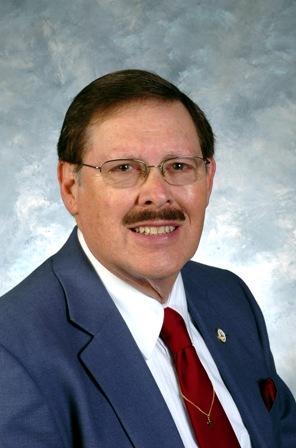
By: State Representative C.B. Embry, Jr.
- Log in to post comments

Advertisements



Clicking on an ad will open the advertiser's web site or a larger view of the ad. Advertise with us!
Advertisements