Advertisement







Don Locke: Looking Through Bifocals
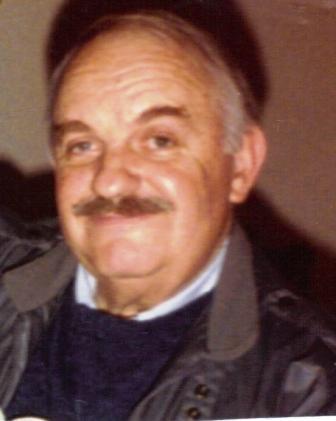
There are several definitions of the word "expert"; I'll mention only two: A HAS-BEEN-DRIP-UNDER-PRESSURE, and, ANYBODY A HUNDRED MILES FROM HOME CARRYING A BRIEFCASE.
Captain Ernie Gann watched his ADF (radio compass) swing 180 degrees as he passed the beacon on the Farallon Islands just off the coast of San Francisco, his initial checkpoint en route to Honolulu. He set his gyro compass to magnetic compass and took up his course for Hawaii. He would direct his navigator to take star-fixes with an octant until they were within a thousand miles of the Hawaii coast and then go the rest of the way on the LORAN (long-range radar). This was late 1940 and the more advanced navigational equipment was yet to come along. Gann had his first officer (co-pilot) call Oakland departure control and give them their first position report. Oakland acknowledged and they were on their way.
This night saw a full load of passengers aboard the new Douglas DC-7. Masten was a new start-up airline with all new equipment. Masten was an established steamship line that sailed from Oakland, California to Honolulu. If desired, passengers had the option of flying over and coming back by steamship, or vice-versa. The airline was a later addition to the steamship service.
As Gann continued his climb through three-thousand feet toward his cruising altitude, all seemed well. It wasn't. Suddenly all four engines quit. Silent as a mummy's tomb. It was as though someone had turned off a giant switch. The experienced captain's training took over; after lowering the plane's nose to prevent a stall, he started a turn back toward Oakland airport. His co-pilot was already on the horn with an all-call MAYDAY, then he notified Oakland they had no power but were heading back to the airport. Gann knew in his own mind he would have to ditch the airliner in the ocean, that he could not glide the plane that far. However when they descended back through three-thousand just as suddenly as the engines had quit, they all came back to life and ran perfectly. They landed back at Oakland and put the passengers on another plane.
Captain Gann knew they had installed the new "dash-five" engines on this particular airplane . . . a brainstorm of some of the top brass at Masten. He also knew they had been test-flown. What he didn't know was they were tested BELOW three-thousand feet, where they behaved perfectly. But an airliner that would not fly above three-thousand feet wasn't much good. So the next step was to bring in the engineers who worked for the engine manufacturer who built the engines . . . THE EXPERTS. "Surely," they said with a foregone conclusion, "the engines weren't being operated properly; there couldn't have been anything wrong with them."
So, they all climbed aboard the plane; they asked Gann to fly the same route he did when the engines quit: "We want to check your engine procedures Captain Gann."
"Good," Gann said, "tell you what, I'll do the flying and you guys operate the engines." They agreed. They passed the beacon at the Farallons and continued on to cruising altitude . . . on through three-thousand feet. Nothing happened. Like someone correcting a small child for spilling his milk, they said, "Captain, do you see now . . . do you understand (your crime)? Are there any questions? If not, we can return to Oakland."
All the time Gann was being reprimanded, out of the corner of his eye he spied a fuel-flow meter hand flicking intermittently. "Would we wait just a few more minutes more before we turn back? . . . unless you fellows are in a hurry."
"Sure," the head cheese of the group said smugly, "take all the time you wa . . . " The smug one didn't get to finish "want" when all four engines quit in concert . . . graveyard dead.
Gann knew the engines were about to quit as before so he'd already rehearsed his little speech for the "experts," plus he had no worry for he knew he would be ready when the engines went silent once more. The liner became a big sail plane as they descended back toward Oakland. The EXPERTS by this time were wringing their hands in panic and begging Gann to "do something."
"Now it was my turn," Gann recalled. "When I finally got them somewhat quieted down where they could hear me, in the silence, save for the wind over the wings, I began my little speech: Now gentlemen, suppose you were flying this plane . . . at night--not daytime with a full load of passengers of men-women-and-children . . . and LITTLE BABIES, and you lost all power?" They were still whimpering, scared out of their wits.
As before when they got back under three-thousand, the engines came to life again and ran fine. When they landed at Oakland airport, the "experts" slunk back home with their briefcases dragging the ground.
It was found that the new dash-five engines simply weren't compatible with the fuel-plumbing on the DC-7. The old engines were put back on; they ran like always.
So much, the PASSING PARADE . . . or maybe AIRSHOW.
Kindest regards . . .
- Log in to post comments

Advertisements



Clicking on an ad will open the advertiser's web site or a larger view of the ad. Advertise with us!
Advertisements