Advertisement







Bill to overhaul public assistance clears final hurdle
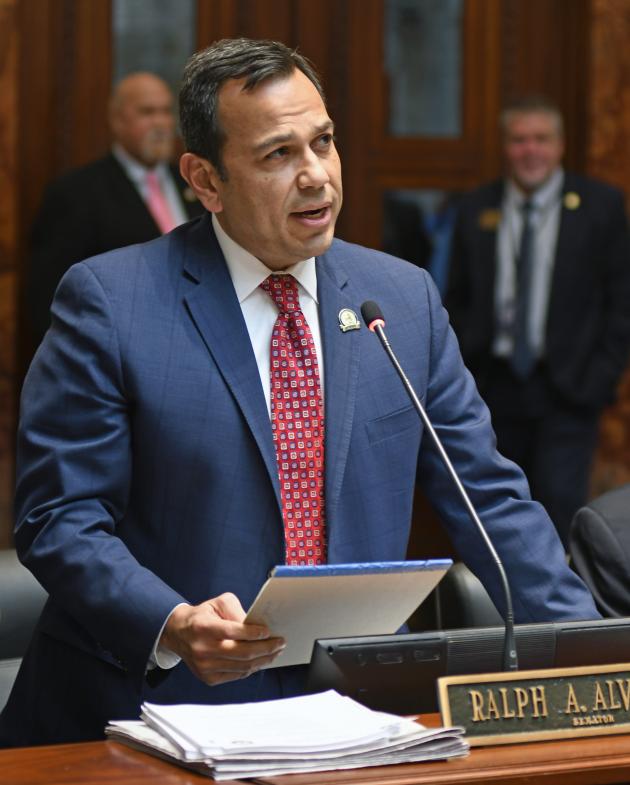
FRANKFORT — A bill that aims to revamp public assistance benefits and combat fraud is headed to the governor’s desk after it received final approval from the Kentucky General Assembly on Wednesday.
House Bill 7 would create new rules around the presumptive eligibility for benefit recipients and seek more accountability from the state Cabinet for Health and Family Services. It would also establish penalties for fraudulent sales of benefit cards.
Another provision seeks to encourage participants in the Supplemental Nutrition Assistance Program – known as SNAP – to make good nutritional choices, supporters say.
“It tries to make sure that public assistance benefits go to the people that actually really need it,” said Sen. Ralph Alvarado, R-Winchester. “It tries to increase accountability, decrease fraud in the system and protect funds for those who need it the most.”
Alvarado presented the legislation on the Senate floor. However, House Speaker Pro Tempore David Meade, R-Stanford, is the bill’s primary sponsor.
“We actually do have a major problem in this state, and that is what we are going to try to start taking care of,” Meade told members in the House.
The measure includes a waiver that can be used at the state health cabinet to expand SNAP for the elderly and the disabled. HB 7 also calls for creation of community engagement programs at the cabinet by April 2023.
Other provisions would set rules around self-attestation and determination of Medicaid eligibility and verification. The bill would also establish the Benefits Cliff Task Force and require the cabinet to develop an online benefits cliff calculator.
“That’s been something that’s been talked about quite a bit through many of our interim meetings. You know that a lot of folks have a hard time transitioning off of public assistance into the private employment, and as a result this is going to hopefully help them as we develop a task force to deal with that issue,” Alvarado said.
The legislation would also require the cabinet to contract with a third party to review presumptive eligibility and compliance, and it would prohibit the cabinet from seeking new waivers or renewing waivers without authorization from the General Assembly with a few exceptions, he said.
HB 7 has undergone changes since the bill was first filed earlier this session.
Senate Minority Floor Leader Morgan McGarvey, D-Louisville, said changes have improved it, but the bill still has shortcomings.
“I think the overall bill is still lacking. I think it is still punishing people, potentially punishing people just for being poor,” he said.
McGarvey said no one likes fraud, but he pointed to estimates showing that instances of fraud in the nutrition program are around 0.002% of cases. He added that, on a per capita basis, Kentucky has the highest rate of investigating and charging intentional program violations of any state in the southeast.
“We are going to spend more money than we are going to save by taking food off of people’s plates. That’s not what we should do,” he said.
House Minority Whip Angie Hatton, D-Whitesburg, also told representatives there are many lawmakers who are relieved to see recent changes that make the bill more agreeable. However, she said she still doesn’t support many of the measures.
“I think it’s just a matter of what keeps you up at night,” she said. “For me, it doesn’t keep me up at night worrying that there is a tiny percentage of people who might get benefits and didn’t deserve them. What keeps me up at night is worrying that there might be people hungry who couldn’t jump through hoops and get benefits.”
Meade told members in the House that the University of Kentucky’s Gatton College of Business and Economics has done several studies on the issue.
He said the college’s latest statistics show that improper enrollments in Medicaid cost the federal government $186 million a year in Kentucky and that Kentucky ranks third in the nation for the biggest increase in improper Medicaid enrollments since the passage of the Affordable Care Act.
“It is not simply just a small percentage of folks who have been improperly enrolled,” he said.
The House voted 70-22 on final passage after the Senate approved HB 7 with a 24-12 vote. It now goes to the governor, who can sign it, allow it to become law without his signature or issue a veto.

Advertisements



Clicking on an ad will open the advertiser's web site or a larger view of the ad. Advertise with us!
Advertisements