Advertisement







Butler County NSDAR Plants Liberty Tree

Saturday June 6, was a busy day in Woodbury with the Green River Ramble, the opening of the Green River Museum for the 2026 season, and the planting of Butler County’s Liberty Tree.
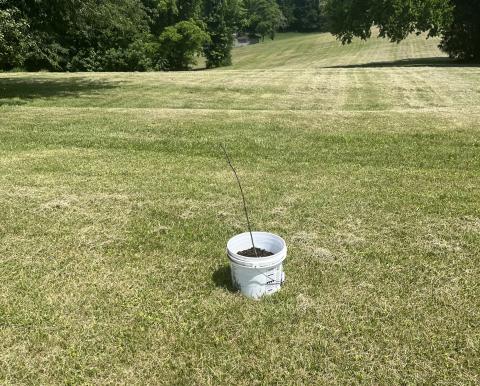
According to the Kentucky Historical Society, “to commemorate 250 years of American history and to honor Kentucky’s contributions, the Kentucky Historical Society has joined forces with the Kentucky Society of the Daughters of the American Revolution (KSDAR) to plant a tulip poplar, Kentucky’s official state tree in each of Kentucky’s 120 counties. The Kentucky Division of Forestry donated 120 tulip poplar trees specifically for the Liberty Tree planting ceremonies taking place across all counties in Kentucky.”
The Liberty Tree holds an important place in American Revolutionary history. In the years leading up to the Revolution, patriots known as the Sons of Liberty gathered beneath designated trees throughout the colonies to discuss concerns about British rule and organize acts of protest. These trees became powerful symbols of freedom and resistance.
The most famous Liberty Tree stood in Boston, where colonists rallied opposition to the Stamp Act in 1765. The tree quickly became a gathering place for patriots and inspired similar Liberty Trees throughout the colonies. Although British troops cut down the original tree in 1775, its legacy endured as a symbol of courage, unity, and the pursuit of liberty.
Today, Liberty Trees planted across the country stand as living reminders of the sacrifices made by those who fought for American independence and the lasting values of freedom, patriotism, and civic responsibility.
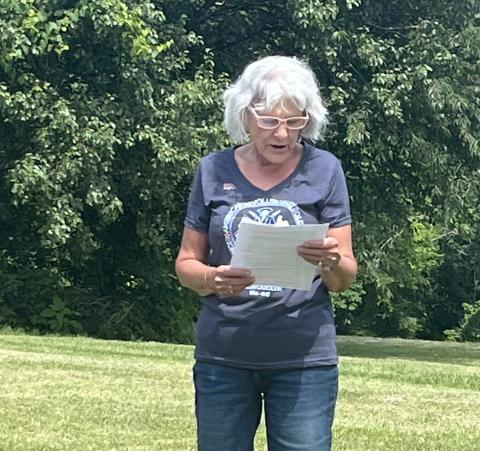
Regent Lynda O'Driscoll
On Saturday, members of the Butler County Chapter, NSDAR held a dedication ceremony in Woodbury to mark the planting of the county’s Liberty Tree. The event brought together local residents, community leaders, and visitors attending the Green River Ramble and museum opening, creating a shared moment of reflection amid a day already centered on local heritage.
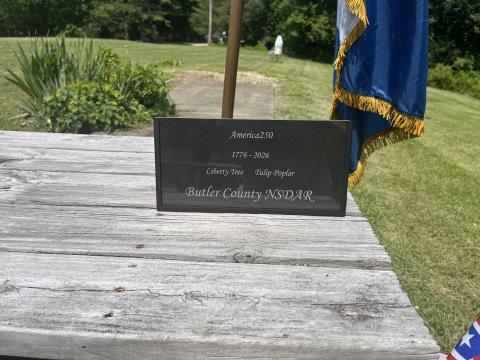
In Butler County, the planting serves as more than a historical commemoration—it also connects present-day community life with the county’s place in the broader story of Kentucky and the nation.

Advertisements



Clicking on an ad will open the advertiser's web site or a larger view of the ad. Advertise with us!
Advertisements