Advertisement







Legislators receive an update on work zone enforcement cameras
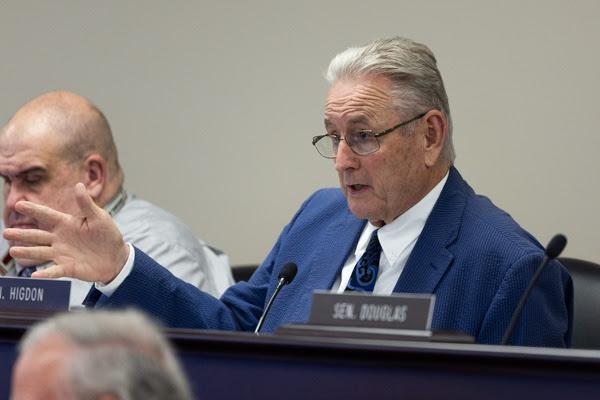
FRANKFORT, Ky. (June 3, 2026) — Legislators on the Interim Joint Committee on Transportation heard an update Tuesday about a pilot program that uses cameras to help combat speeding in work zones.
John Moore, deputy state highway engineer for the Kentucky Transportation Cabinet (KYTC), presented data on the Camera Assisted Speed Enforcement (CASE) pilot program. The initiative used automated cameras to reduce speeding in work zones in Shelby, Lawrence, Whitley, Martin and Fayette counties in fall 2025.
The program is the result of House Bill 664, which the Kentucky General Assembly passed last year. It allows police to issue citations when automated cameras detect that a driver is traveling 10 mph over a posted speed limit in a work zone.
The Kentucky bill was modeled after a program in Arkansas and does not use a mail-in ticketing system. Instead, encrypted data is sent to a law enforcement officer stationed near the work zone. Then, the “law officer is required to pull you over and cite you on the side of the road,” Moore said.
The cabinet worked closely with the Kentucky State Police and the Association of Highway Contractors to implement the CASE pilot program and to determine the best technology solutions to fit the needs of the state, according to the presentation.
Moore said the cabinet received feedback from transportation officials in 20 different states, which helped identify five potential vendors.
The solar-powered cameras are mounted 13 feet high and can track multiple lanes simultaneously. Moore said signs advise motorists that cameras are in use and beacons denote when bona fide workers are present on the site.
“No personal information is gathered or retained within the system. Only a picture of the vehicle and the license plate is sent downstream to the officer,” Moore said.
KSP is currently the only law enforcement entity participating in the program, but other local police agencies have expressed future interest.
Over the past nine months, the cabinet has been collecting speed data in the work zones, and an initial review demonstrates that drivers are slowing down, Moore said.
In Shelby, Whitley and Martin counties, data showed a 20% decrease in the number of vehicles traveling more than 10 mph above the speed limit.
Data was not collected in Lawrence County since cameras were not yet installed, and construction was wrapping up during the time of data collection in Fayette County.
Lead sponsor of the bill, Rep. John Blanton, R-Salyersville, said “when we're reducing those speeds — which obviously it's doing in those zones — we know for a fact it's going to reduce accidents. We know for a fact that will reduce injuries. We know for a fact that will reduce fatalities.”
Moore said less than one year of safety data has been collected to date, and it will likely be June 2027 before any definitive safety metrics and crash analyses can be reported.
Blanton requested that when officials are collecting data over the course of the next year, they compare accidents, injuries and fatalities between work zones with cameras and those without cameras.
Sen. Jimmy Higdon, R-Lebanon, said “no doubt this piece of legislation will save lives, and I commend Chairman Blanton for his work.”
The state is currently working on adding 12 more camera units, “with the potential to grow that to a total of 24 within the contract life,” Moore said.

Advertisements



Clicking on an ad will open the advertiser's web site or a larger view of the ad. Advertise with us!
Advertisements