Advertisement







Q-and-A about SB 181 from the lawmaker who sponsored it
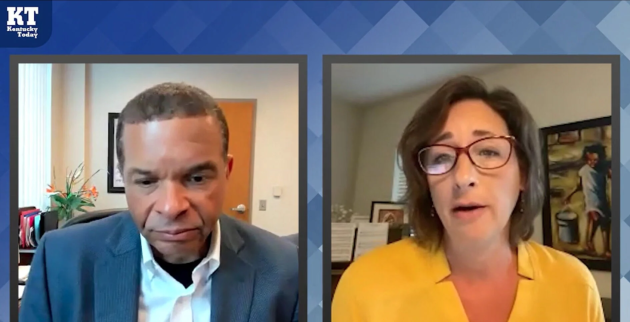
LOUISVILLE, Ky. (KT) — Senate Bill 181, which was passed by the General Assembly in 2025 and signed into law by the governor, is designed to prevent the grooming of students for potential abuse through the public schools.
The law limits private digital communication between public school teachers, staff and volunteers with students. They must use traceable communications platforms approved by the school district.
However, the law has led to questions regarding implementation, particularly related to student pastors and others who minister to public school students.
Below is a Q & A based on a Kentucky Today interview with Sen. Lindsey Tichenor, a Republican from Lagrange, who sponsored SB 181.
The questions and answers have been edited for clarity and brevity. The full interview is available here on the Kentucky Today podcast.
Q: What led to this legislation and why is it necessary?
In 2025, I was approached by the Education Professional Standards Board and the Kentucky Dept. of Education to address the issue of grooming. I looked at a lot of data that they have regarding educator sexual misconduct, as well as other cases within the school system that involve counseling, volunteers or coaches that keep popping up in the news. I decided the best move to make in order to address grooming was to go towards the access point.
A study by the Education Professional Standards Board determined, over a 5-year period, that in 70 percent of abuse cases, the access point was through technology and communications.
This bill is returning to what used to be the way we communicated, bringing the parents into the conversation. We've seen technology advance so rapidly that almost every student has a phone in their hand. But we've not really been intentional about putting parameters in place to protect students from bad actors.
Q: The law requires private communication only through traceable platforms approved by the school district, correct?
Yes, absolutely. And it also allows for parents to opt in for other means of communication. If it’s a teacher or volunteer or coach that they are in communication with, parents can approve those communications.
Q: To whom does the law apply?
It applies to everybody who's in a position of authority within our school system, certified, non-certified staff, volunteers, extracurriculars, with coaching volunteers and coaching staff.
Q: Many churches have student pastors or ministry leaders who volunteer in public schools as club sponsors, coaches, etc. How does this bill affect their communication with students who may also be attending their churches?
That's a great question, and it's one that I've gotten many times since this bill became law. I think what we really see a lot of churches already have policies in place to ensure the safety of students that are working with youth pastors or mentors.
Usually, the parent is involved, and they understand what is being communicated. I hope that this gives an opportunity for churches that don't have anything in place for ministries, that don't have any policies in place to go ahead and adopt policies to ensure student safety.
Unfortunately, this is an issue not just within school systems. It's an issue within our churches, and we’ve started seeing our churches become more stringent and protective of their students and the communications that they may be having that might not be appropriate.
If a youth pastor is serving as a volunteer within the school system, the parents of the students can sign a waiver for them to be able to communicate with those students outside of the approved school system platforms.
Q: How should a student pastor or ministry leader respond to social media messages or other communications initiated by a student in crisis if that message does not come from an approved platform?
If that student pastor is volunteering in the school, this would apply to them if they're not, it doesn't apply to them. But regardless, I would bring that parent into the situation. If it's an issue where the parent can't be brought into that situation, I'd bring the pastor into that situation and make sure that there are other eyes on that crisis.
Obviously, our kids that are coming to our churches and involved in youth groups lean heavily on the mentorship role that a pastor will have over their lives, and that's a wonderful thing. But, as much as possible, bring the parent into that. And of course, they can have those waivers signed by the parent to allow that direct communication.
Q: Do student ministers who volunteer in the school district apply for the waiver themselves? How does that work?
No, it's up to the parents to be able to fill out that waiver. What I would recommend, if the youth leader or ministry volunteer is involved at the school, that they go ahead and let the parents know, “Hey, this is the new law, and here's the process to go through.” If parents approve of the communications, they can fill out the waiver and it will be on file with the school.
Q: How should ministry leaders advise volunteers that they work with, such as small group leaders and Sunday School teachers, about communicating with students in their group, if those volunteers also work in the school district?
The same thing. I would get the parents involved to give those permissions for them to have those communications. Again, the state really can't reach into the church and dictate how the church operates, but it would be my hope that churches in general would adopt policies, if they haven't already, to be able to ensure safe communication within their roles as mentors to students.
Q: Does the law include bus drivers? Some student pastors and ministry leaders are also school bus drivers.
Yes. Again, I would just have parents fill out those waivers for them to be able to have those communications with students. Again, this is about private direct communication with students. But, if a church youth minister has a certain platform that they use to communicate, go ahead and have parents opt in and allow them to have those communications.
It's just a safe way to ensure that the volunteer is protected and the parents are involved in those communications.
Q: If a volunteer student ministry leader is not employed by the school district, does this law affect how they can communicate with public school students?
No, if they're not involved in the public school system, it doesn't apply.
Q: Does this law affect which social media groups or messaging platforms churches may use to communicate with their congregation which, in most cases, would include public school students?
No, not unless the pastor is volunteering at the school. It should not affect how the church can communicate outside of any school relations.
Q: Can churches use the district’s communication system if they choose to? How does that work?
Sure, they could if they choose to, but some of these platforms that our schools are adopting are specific to education, so it may not be one that a church has available to them.
They could use the same type if it’s like Remind, for instance, which is a great platform that's neutral and used for various different types of communications and groups, and it's traceable as well. So, they could utilize that same platform, but within the jurisdiction of the church and not necessarily reaching into the schools to use of their platform.
Q: Does this law apply to private school communications?
This does not apply directly to private schools. They don't accept tax dollars from us. But oftentimes when we pass legislation, private schools are watching, and they'll begin to implement some of those laws that we've that we're putting in place regarding education. So, I'm very hopeful that a lot of private schools will adopt these measures as well.
Q: Do you hope that this law may cause some churches to look at their own communications policies and perhaps adopt some of these practices?
Sure, absolutely. I was thrilled to hear about a very large private Christian school that's already implementing a policy. It is looking at adopting some things to ensure safety for their staff and their students, and I don't see why we shouldn't see churches do that as well.
I know a lot of churches already have those policies in place. I think it's just a natural means to be very intentional about technology and how that's really affecting our students these days. We have so many kids that are just on social media, on platforms where they're accessible. If we can make sure that we have parental involvement in those communications and in a traceable form, I think we're going to see, I hope that we'll see lower cases of inappropriate communications.
Honestly, it just frustrates me to continue to see cases within public education, private education, churches, where students are, and we have, unfortunately, bad actors that pursue these locations where kids are easily accessible.
If we can close that loophole of accessibility, I think we'll be able to protect students, we'll be able to protect the integrity of our institutions as well.
Q: If a private school teacher, counselor, or coach communicates with a student who is in a public school, does the law apply?
No, it really couldn't apply because that teacher is not certified through that public school.
Q: Where can people turn to for answers to some of these questions?
I think we're going to see a lot of the questions get fleshed out as we move forward. I am working on a draft to bring some clarification to this bill and some of the measures within the bill that have come forward are bringing up some conversations.
Often when we pass legislation, we need to go back in and tweak some things and clean it up a little bit. I'm working on that right now. If this is a hot topic in January, and there's a lot of questions, we'll go ahead and file a change to this in the first couple of days of session. Any changes that we need to make, they'll happen relatively quickly once we get back into session.
But I think as we move through this, a lot of the questions are going to answer themselves, hopefully, I think we're going to see as the schools start to implement this, as people start getting used to the traceable communications applications that they're utilizing in their schools and the waiver forms for parents to opt into those communications outside of those systems, we're going to see a lot of the questions answered.
We're starting to look back at the language of the bill to see how we can tweak this—how to make this work without lessening the intent of the bill and be able to move forward with a strong piece of legislation and policy that still protects our kids and our institutions.
Q: What kinds of tweaks are you looking at?
There were some questions as to whether schools had to accept the waivers. I want to clarify that they are required to accept those waivers. We're going to clarify some of the definitions of a volunteer and what that looks like – to apply the law more specifically to volunteers that are in the schools on a more regular basis, not necessarily the parent that volunteers on a field trip.
We're also going to look at the family definition. There were some questions that came up about stepparents and in-laws. I had assumed the definition had already answered that, but there's some question about that. We're just going to bring some clarification to some of those definitions of families who are already automatically exempt.
Q: For clarification, if a ministry leader has helped with a school project or event in the past, does that make them a volunteer? Does this law apply to them?
That's a good question, and I think we'll bring some clarity to that when we get this draft fully fleshed out. I feel like the language probably speaks more clearly to current volunteers as opposed to past volunteers if they're not actively involved in the school right now. I don't think that it would pertain to them. But again, another reason to bring some clarification to the language.
Q: What about concerns about the law’s constitutionality, particularly regarding free speech and religious expression?
I don't think that it has a constitutional issue. When you look at regulating First Amendment rights within the public-school sector, as a state, we have an interest in the safety of children, so we are able to put measures into place that are stricter within that K-12 system to ensure safety. And where that looks like it might step on a person's constitutional right in order to access students, this bill is upholding the parental right that we've seen the Supreme Court clarify and uphold for years. It falls on parents to protect their children.
This measure is really a parental rights bill to be able to make sure they have knowledge of who's communicating with their children and give permission to who can have access to private conversations with their kids.
Reprinted with permission from Kentucky Today

Advertisements


Clicking on an ad will open the advertiser's web site or a larger view of the ad. Advertise with us!
Advertisements